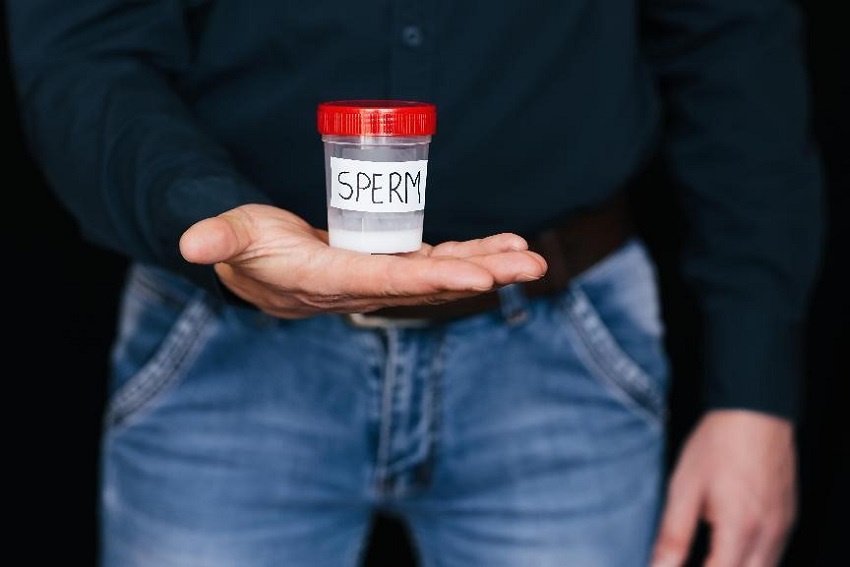
To all the would - be parents, on the long journey of seeking to have a child, the factors of male infertility often leave many families confused and helpless. Today, let's delve into a relatively hidden yet cause of male infertility - Y chromosome microdeletion.
The Y chromosome, unique to males, carries numerous genes closely related to male reproductive functions. When a small deletion occurs in a specific region of the Y chromosome, that is, Y chromosome microdeletion, it may have a serious impact on sperm production and development. This deletion does not change a man's appearance or secondary sexual characteristics, and is often discovered only after a long period of unsuccessful pregnancy preparation and a detailed fertility examination.
The causes of Y chromosome microdeletion are mostly related to genetic mutations, and it is currently difficult to completely prevent it medically. Once this occurs, the number of a man's sperm may be significantly reduced, or even no sperm may be produced at all, that is, azoospermia, which undoubtedly poses a huge obstacle to natural conception.
Let's step into the story of Mr. Li and his wife, Ms. Wang. This couple had been married for many years and had always been looking forward to the arrival of a little life. However, repeated disappointments plunged them into the abyss of pain. They sought medical help everywhere, tried various folk remedies and conventional treatments, but never received good news. In a comprehensive fertility examination, Mr. Li was diagnosed with azoospermia caused by Y chromosome microdeletion. This news was like a bolt from the blue, instantly draining the color from their lives.
Just when they were almost desperate, they learned about IVF - PGT through an introduction. Holding on to the last glimmer of hope, they came to a professional reproductive center. The doctor explained the treatment plan to them in detail. Since Mr. Li could not provide usable sperm himself, the reproductive center suggested selecting suitable sperm from the sperm bank for in - vitro fertilization with Ms. Wang's eggs. After the formation of embryos, pre - implantation genetic testing (PGT) in IVF - PGT technology would be used to conduct a comprehensive genetic screening of the embryos to ensure the health of the transplanted embryos.
Ms. Wang started the arduous ovulation - induction process. She gave herself injections on time every day and regularly went to the hospital to monitor the development of follicles. Every examination carried their full expectations. On the day of the egg retrieval surgery, Ms. Wang was both nervous and expectant. Fortunately, everything went smoothly. And a suitable sperm was successfully matched in the sperm bank. In the laboratory, the sperm and eggs successfully combined to form multiple embryos. After PGT testing, the doctor selected the highest - quality embryo and transplanted it into Ms. Wang's uterus.
The waiting days were filled with agony, but fortunately, the pregnancy test result two weeks later showed that Ms. Wang was successfully pregnant! At that moment, they wept with joy. Years of effort and perseverance finally paid off. Now, they have welcomed a healthy and lovely baby and are living a happy life.

If you, like Mr. Li and Ms. Wang, encounter difficulties on the journey of having a child, COSTAIVF is willing to be your most solid backing. We have professional sperm and egg banks, strictly screening high - quality germ cells to provide you with more choices. As a senior expert in the field of reproduction, Dr. Nathan Zhang has rich clinical experience and cutting - edge medical knowledge, and will tailor a personalized treatment plan for you. Don't give up hope. Contact us and let's join hands to start your happy pregnancy journey.
